The Culture of Rush and Slow thinking

Slow down! This is going to be a long post, but it is worth you time. If you are in a rush, go down to the last paragraph.

In a world of a constant rush, who is doing the slow thinking for you?

THESIS
It’s not just your imagination. The pace of life is accelerating in spite of all of the conveniences that we are exposed to, such as airplanes and fast trains, quick cars, productive computers, smart phones, smart houses, Internet with its instant availability, dishwashers, laundry machines, mixers, smart and functional food processors, robotized lawn mowers and abundance of other tools that are supposed to free up the time. The same is the situation at work, where work processes, production schedules and pressure to commit to rapid decision-making require an immediate action. This trend is nurtured in the public culture with its rapid-fire news cycles and next-day delivery to “speed-watching” videos and the relentless pressure to be more productive, we are all caught in a current of increasing speed. While often exhausting, this trend is not arbitrary. However, a solid question retains its validity whether we recognize the rush or not: towards what are we all rushing… towards what and, most importantly, what for?

The rush culture is built by the environment around us. It builds on an interesting connection to the processes of our individual, internal thinking with an outcome which is not pretty. The persistent rush is the logical outcome of a powerful convergence of technological, economic, and social forces affecting our fast and slow thinking (processes described by Daniel Kahneman) in a way that makes sense, while making no sense. Such duality is absurd, but it seems that humanity as a kind and its individual agents somewhere along the way gave up and embraced all of the absurdities to be able to discern any and more importantly do something about it. Please, follow me and I will show you what I noticed in a minute or so.
For simplicity, let’s consider these three reasons why our world is systematically speeding up – the technological, economic, and social forces. I am sure, these dimensions are not exhaustive, but sufficient to see the pattern and patterns is what matters, when one tries to see a bigger picture.

Technology is the primary driver of acceleration, creating and then catering to an expectation of immediacy. It establishes the feedback loop of instant gratification. Do you remember the clicking sound of the modem on your Windows 95 PC dialing the network provider and how long it took to load a webpage or download a favorite song? We’ve moved from dial-up internet to 5G. A delay of a few seconds in loading a webpage or video is now considered unacceptable. This eradication of technological waiting has rewired our patience, making us expect the same instantaneous response from other facets of life. Now, couple that with social media and news feeds powered by algorithms that prioritize engagement. Content that is new, shocking, or controversial gets pushed to the top, creating a relentless, 24/7 news cycle. The race for clicks and views incentivizes a faster churn of information, leaving little time for reflection. On top of that, the wide spread of productivity software, communication platforms, and automation tools, which are designed to help us do more in less time, did not produce more free time for its users. In fact, we end up in the “productivity paradox”: instead of creating more leisure time, we simply fill the saved time with more tasks, raising the baseline expectation for output ending up in a ferocious rat race chasing the undefined “better life”.

Continue reading “The Culture of Rush and Slow thinking”

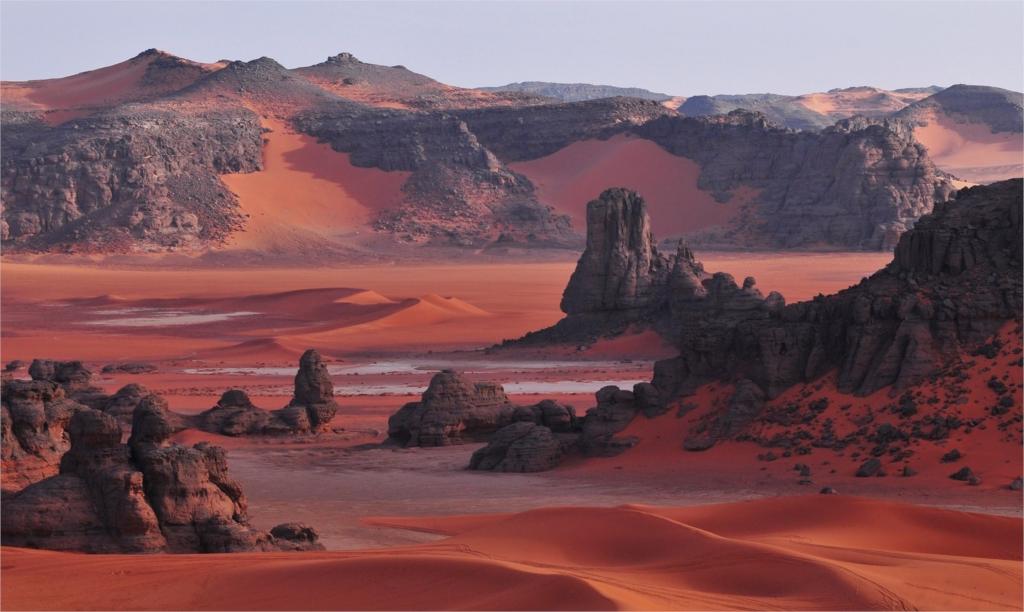
I am a voice crying in the wilderness

I am a voice crying in the wilderness. I am here and I am shouting into the void.

Source: https://pichold.ru/priroda/krasivaya-priroda-pustyni50-foto.html

“A voice crying in the wilderness,” in the language of the church, signifies a futile appeal, an expression of despair with no hope of a response. Who would cry out in the wilderness? I, on the contrary, know that today many people live in a wilderness: loneliness, meaninglessness, emptiness, and a thirst for life that overflows with meaning, fullness, emotions, energy, and a result that will remain even when you have finished your journey—in a word, life in abundance.

Many great figures were in such a wilderness before they began their great service. Remember Moses, Elijah, John the Baptist, Jesus of Nazareth. I am not a great one, but I too have been in such a wilderness. I know firsthand what it’s like to search day after day for a sip of life, just as a wanderer searches for a sip of water, for shade and rest. But I also know that only by passing through the wilderness can one begin something great.

I decorated my own wilderness with various backdrops, filled it with noise: parties, entertainment, experiences, discussions on profoud topics, traveling, friends, career—noise that would distract me from the thought of emptiness. But Continue reading “I am a voice crying in the wilderness”

Я – глас вопиющего в пустыне.

Source: https://pichold.ru/priroda/krasivaya-priroda-pustyni50-foto.html

Я – глас вопиющего в пустыне. Я тут и я кричу в пустоту.

“Глас вопиющего в пустыне” в церковном языке означает напрасный призыв, выражение отчаяния, без надежды на отклик. Кто будет кричать в пустыне?! Какой здравомыслящий пойдет на такое? Я же, напротив, знаю, что сегодня многие живут в пустыне: одиночество, бессмысленность, пустота и жажда по жизни, которая наполняет и переполняет смыслом, полнотой, эмоциями, энергией и результатом, который останется даже, когда ты закончишь свою дорогу – одним словом, жизнью с избытком.

Многие великие были в такой пустыне прежде, чем начать свое великое служение. Вспомните, Моисея, Илию, Иоанна Крестителя, Иисуса Назарянина. Я – не великий, но и сам был в такой пустыне. Я не понаслышке знаю каково это изо дня в день искать глотка жизни, как странник ищет глотка воды, тенька и покоя. Но я также знаю, что только пройдя пустыню можно начать что-то великое.

Свою пустыню я украшал разными декорациями, заполнял шумом: вечеринки, развлечения, впечатления, дискуссии на громкие темы, поездки, друзья, карьера, – шумом, который отвлекал бы меня от мысли о пустоте. Когда же шум затихал и друзья расходились, я оставался один на один с теми же вопросами от которых так сильно бежал: ну, и что? Зачем это все? Зачем ты? Чтобы что? И какой бы суррогат я не предлагал моему внутреннему голосу вопиющему в пустыне в отмашку на эти вопросы – ничего не помогало.

Я жадно искал смысла, который мог бы объяснить то, зачем “это-все” и какое мое место в истории, как жить осмысленно, что делать, чтоб сгорая согреть. Многие звучные и пафосные ответы философии, религии и науки я пропускал через себя, чтоб найти отражение внутри и удовлетворить жажду, но все впустую раз за разом вскрывая все большую пропасть требующую заполнения. 26 лет прошло с тех пор, как я начал задаваться вопросами смысла жизни пока однажды не услышал о том, что преобразовало мою жизнь. Там в пустыне я нашел путеводную звезду, следуя которой я вышел из пустыни. Это мечта, миф, сон, перспектива, но это также и самая реальная реальность, которая помогла мне найти самое разумное объяснение и ответы на те большие вопросы, которые мучали меня с самого моего первого осознанного поиска в ранней юности.

Если ты в пустыне, я ищу тебя. Тебе не нужно там оставаться. У меня есть добрая новость – выход есть. Я приглашаю пойти со мной. Я расскажу, что я выучил в моей пустыне, что помогло мне найти смысл, видение, цели, желание и энергию. Мой жизненный путь отличается от твоего и может быть не все подойдет тебе, но я хочу дать тебе перспективу, показать тебе вопросы и направить в сторону ответов. Когда у тебя есть карта, компас, ориентиры, ты можешь проложить свой путь. Выходи из пустыни. Мы нуждаемся в тебе, в твоих талантах, в твоем опыте и твоем жизненном тепле.
Присоединяйся к дискуссии. Давай строить окружающий нас мир общими усилиями.

Meaningless denial

It is surprising how far a human can go to deny the undesired but evident. All of the discussions about meaning and absurdity by Camus, Sartr, Russel, Becker and the likes are the stubborn denial of the evidence and the obvious. Nevertheless, they go in depths in order to justify their poor choice with complex and rigorous reasoning, which once and for more proves that we are the product of the stories we choose to tell to ourselves. Their stories though sound sublime and heroic wrapped in solemnity  in essence are empty. In the words of Andersen’s fairytale punchline, “The emperor has no clothes.”

What is the measure of success – to have or to be

I still haven’t met a single person, who consciously has made a decision to be a failure, not a single person has made a plan from his childhood to be a loser. It is natural to strive, fight, aim and rush towards a goal. Even the most broken people in our society, when asked about his dreams can produce a single dignified and worthy objective he/she wanted to be and to achieve. We all want to be successful, to be fruitful, to live an abundant and exciting life. However, when asked about success and that desired life, we often get lost in the definitions. What is measure of success then?

Admittedly, we live in the times when the measure of success is very messed up. The social media, educational institutions, marketing and advertisements portray success in a very mercantile manner. The materialistic, possessive mode of existence dominating the modern society expressed in a condensed ‘Career-Stuff&Travel’ model lays at the foundation of the success assessment. This mindset prioritizes acquisition and consumption over the more meaningful way of living. Yet, due to its immediate visibility, ‘Career-Stuff&Travel’ has undeniable argumentative power – you either have it or not. If you have it, show it; if you don’t – shush! Any attempt to challenge the status quo meets the opposition commonly expressed as: “You say so because you are poor” or “Oh, if you are so smart, why are you so poor?”

Two centuries ago Talleyrand, French statesman, has given rather exhaustive and concise argumentation against the absurdity of the claim. He said:

To make a lot of money, you do not have to be smart, but need to lack conscience (Charles Maurice de Talleyrand-Périgord).

However, the sense of superiority and self-justification are too hard to set aside. The strong mythology of materialistic success as expression of the inner riches appeals to the deepest needs of a human soul blinding one’s mind with its charm just as it was with the King Theoden from ‘The Lord of the Rings’ under the spell of Grima.

Continue reading “What is the measure of success – to have or to be”

Bach – Air by Friedrich Gulda

The beauty of art, and music in particular, is in its ability to exalt one’s soul into transcendence without any manipulation, force, even an effort.  This interpretation of Bach’ Air in D Major by Friedrich Gulda is magnificent. Enjoy! Do not skip on that one.

Rat race for ‘happiness’

Recently, came across the ‘Happiness’ cartoon by Steve Cutts (2017). The genius of this art piece is in its blunt message. It makes one see the rat race routine from a side to realize something. Have you wondered, where we all are than much in a rush? For what good (if any good) we run?

How much the rush for happiness is imposed (prescribed) and how much is self-initiated? Can it be both?

Do other people irritate you?

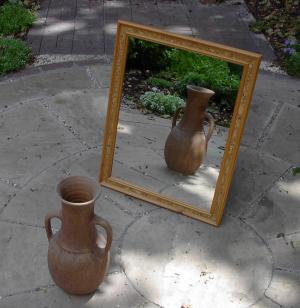
“For every person, their neighbor is a mirror from which their own vices look back at them. But a person acts like a dog that barks at the mirror, thinking it sees not itself but another dog.” — Arthur Schopenhauer

Source: Wikimedia

«Для каждого человека ближний — зеркало, из которого смотрят нанего его собственные пороки. Но человек поступает при этом как собака, которая лает на зеркало, предполагая, что видит там не себя, а другую собаку». А. Шопенгауэр