A curious observation about Daoism

Disclaimer

I just got acquainted with the “Tao Te Ching” from a translation by S. Mitchell. I never was much into that philosophic paradigm until today, so take my words with a bit of salt. As far as I understand, this is the fundamental philosophic work of Daoism, influencing Confucianists’ and Buddhists’ thinkers.

Brief about…

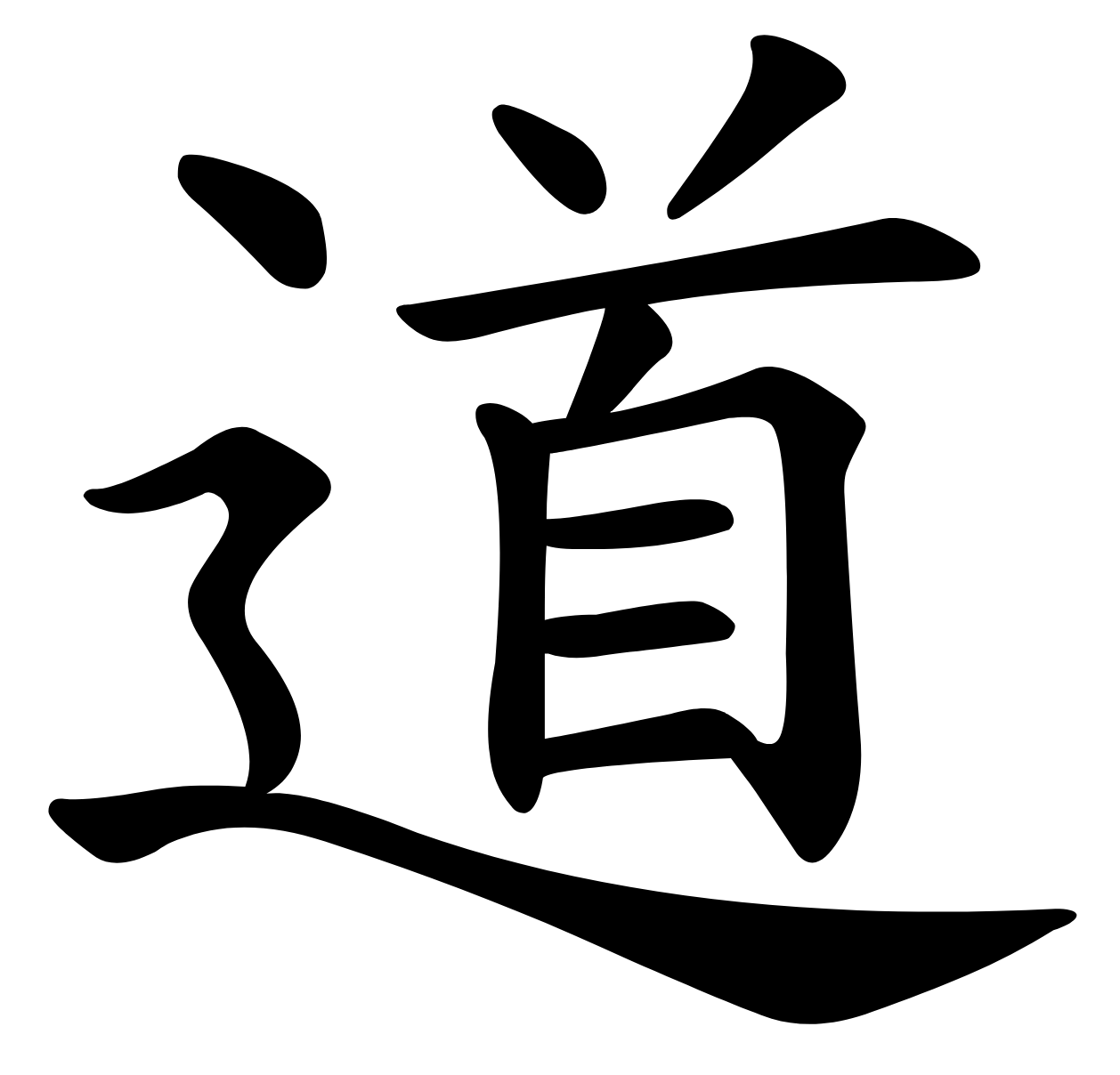
Daoism, as a philosophical movement, emerged in the East (let’s simplify – “China”) during the period from the 4th century BCE (475–221 BCE) and is attributed to Laozi. Its main work is the Tao Te Ching (also known as Tao Te King or Dao De Jing) means “the Way and its Virtue” in simplified Mandarin. About 400 years later, a Teacher appeared in Israel, Who claimed that He is “the Way, the Truth, and the Life.” It would be one thing if Christians were stretching that connection, as I am supposedly doing right now, but there is a (not‑so‑)small “but”…

Observation

What’s curious about this is that this philosophical movement (Daoism) emerged around the same time that Greece saw the rise and flourishing of its own school of philosophy (Socrates, Zeno of Elea, Plato, etc.), while in Israel the prophecies fell silent and the Glory of God departed from the Temple. In other words, I see that the revelation of true God has stopped being uniquely revealed to Israel and became available to nations at about the same time. The East is searching for the Way. The West is searching for Truth. Everyone is searching for Life. It’s curious how they intertwine with the claim of Jesus from Nazareth, isn’t it?

About me: personal identity or who am I

Fairly familiar to many perception of one’s self

It does not really matter who am I, what I have achieved or aim to achieve, what I own or whom I know. What does matter is what I have to offer and that is of the immense value and infinite importance. I have a story to tell that changed my life and, if it is given a chance, hopefully, can change yours too.

This is who am I. I am the voice of the one shouting in the dessert. I erupt for a short moment to disappear in the void hoping to be heard. I cry out about the solution to the crave for a meaningful life, about the possibility to belong to something big and live the life truly fulfilling life that transcends the mere routine of existence.

The stories we tell about ourselves, about others, about our surroundings shape our perception of reality, the way we live life, the way we meet its challenges and opportunities, the height and depth of our dreams, goals and eventually the end at which we dare to look or not. The story I have is the story about infinity and the infinite. It is the story we all aim to hear and, moreover, the story we want to be a part of. It is the story of the Kingdom.

I am interested in abundant living, the type of life that is meaningful, purposeful, exciting, engaging. The life that overflows with energy, transformation, motion, flow – the life worth living. The live that leaves a mark (not holds a mask). Since the mission of attaining such life is far beyond my individual abilities, I am interested in other people, who are actively engaging with life, yet as I was, feels a need in a vision that transcends own individualistic/egoistic triggers, a vision worth living and even dying for. If you are full of energy to bring about the change in your surroundings in your family, at work, in your town or country, but do not yet see how to do that, get in touch with me. I have a vision to offer.

Meaningless denial

It is surprising how far a human can go to deny the undesired but evident. All of the discussions about meaning and absurdity by Camus, Sartr, Russel, Becker and the likes are the stubborn denial of the evidence and the obvious. Nevertheless, they go in depths in order to justify their poor choice with complex and rigorous reasoning, which once and for more proves that we are the product of the stories we choose to tell to ourselves. Their stories though sound sublime and heroic wrapped in solemnity  in essence are empty. In the words of Andersen’s fairytale punchline, “The emperor has no clothes.”

What is the measure of success – to have or to be

I still haven’t met a single person, who consciously has made a decision to be a failure, not a single person has made a plan from his childhood to be a loser. It is natural to strive, fight, aim and rush towards a goal. Even the most broken people in our society, when asked about his dreams can produce a single dignified and worthy objective he/she wanted to be and to achieve. We all want to be successful, to be fruitful, to live an abundant and exciting life. However, when asked about success and that desired life, we often get lost in the definitions. What is measure of success then?

Admittedly, we live in the times when the measure of success is very messed up. The social media, educational institutions, marketing and advertisements portray success in a very mercantile manner. The materialistic, possessive mode of existence dominating the modern society expressed in a condensed ‘Career-Stuff&Travel’ model lays at the foundation of the success assessment. This mindset prioritizes acquisition and consumption over the more meaningful way of living. Yet, due to its immediate visibility, ‘Career-Stuff&Travel’ has undeniable argumentative power – you either have it or not. If you have it, show it; if you don’t – shush! Any attempt to challenge the status quo meets the opposition commonly expressed as: “You say so because you are poor” or “Oh, if you are so smart, why are you so poor?”

Two centuries ago Talleyrand, French statesman, has given rather exhaustive and concise argumentation against the absurdity of the claim. He said:

To make a lot of money, you do not have to be smart, but need to lack conscience (Charles Maurice de Talleyrand-Périgord).

However, the sense of superiority and self-justification are too hard to set aside. The strong mythology of materialistic success as expression of the inner riches appeals to the deepest needs of a human soul blinding one’s mind with its charm just as it was with the King Theoden from ‘The Lord of the Rings’ under the spell of Grima.

Continue reading “What is the measure of success – to have or to be”

Rat race for ‘happiness’

Recently, came across the ‘Happiness’ cartoon by Steve Cutts (2017). The genius of this art piece is in its blunt message. It makes one see the rat race routine from a side to realize something. Have you wondered, where we all are than much in a rush? For what good (if any good) we run?

How much the rush for happiness is imposed (prescribed) and how much is self-initiated? Can it be both?

On the Danger of Habit

Source: pikabu.ru

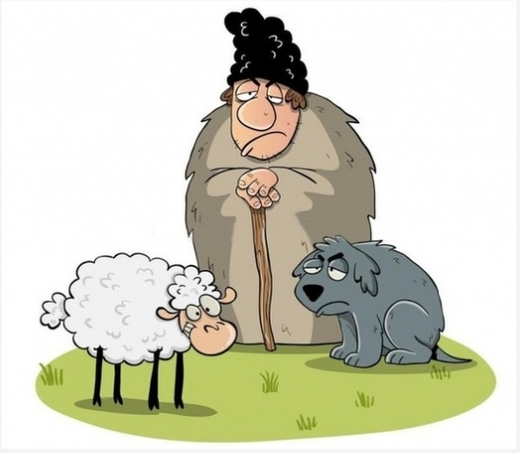
The life of a philistine is as prosaic as the life of the sheep from the old Georgian parable:

“the sheep spent its whole life fearing wolves, but in the end, it was the shepherd who ate it.”

Often, danger does not come from circumstances beyond one’s control, nor from people who pose an obvious threat, but from those who constitute the ordinary course of life and, due to their familiarity, are perceived as normal, as natural.

Who is the shepherd in this proverb?
The shepherd is the one who “feeds”, who influences daily routines, who defines the world and one’s perception of it. With their care and boundaries, they protect but also limit possibilities. Perhaps in the wild, such a sheep would not live long, but how different its life would certainly be compared to the routine of “field-pasture-field.” Would the sheep be as “useful” in freedom as it is within the confines of the flock? That is an interesting question, worthy of an answer. And something tells me that the answer depends on the perspective from which it is given—that of the shepherd, the sheep, or the wolf.

Do other people irritate you?

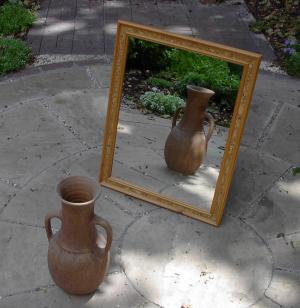
“For every person, their neighbor is a mirror from which their own vices look back at them. But a person acts like a dog that barks at the mirror, thinking it sees not itself but another dog.” — Arthur Schopenhauer

Source: Wikimedia

«Для каждого человека ближний — зеркало, из которого смотрят нанего его собственные пороки. Но человек поступает при этом как собака, которая лает на зеркало, предполагая, что видит там не себя, а другую собаку». А. Шопенгауэр