Approaching the Singularity Point

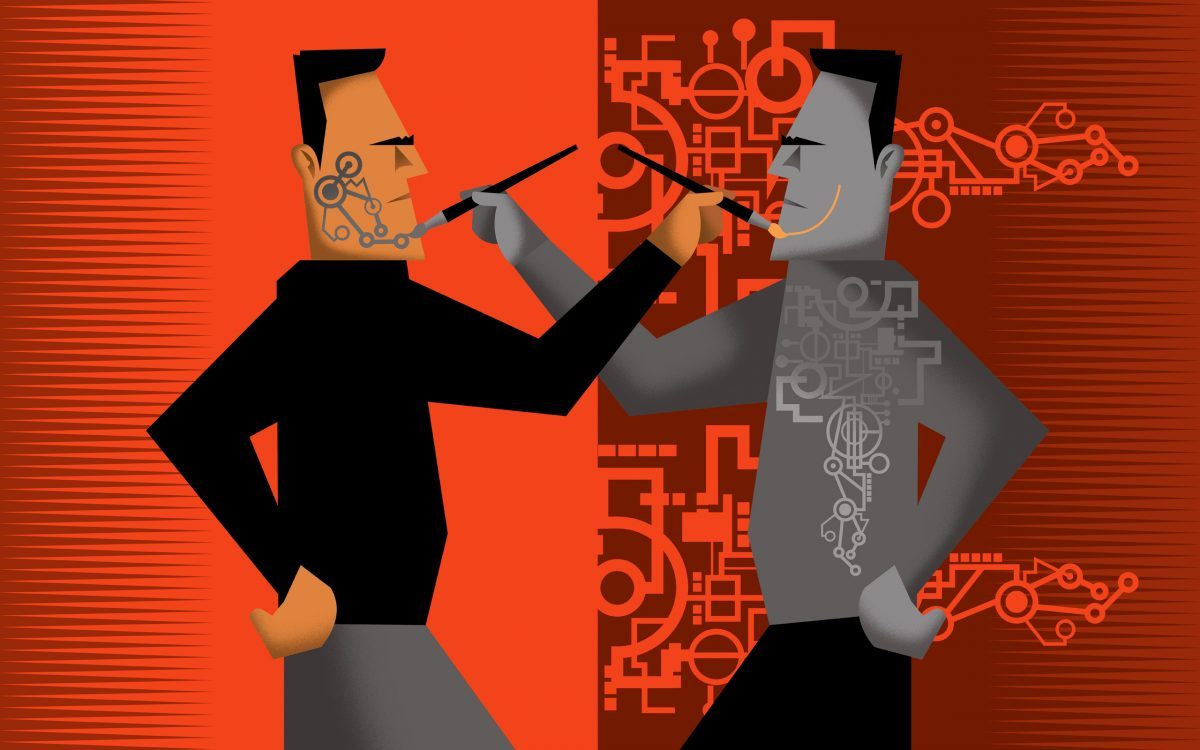
The singularity is a point where conventional rules break down and predictability collapses. It manifests across our intellectual landscape in remarkably consistent ways. In mathematics, singularities mark where functions explode to infinity or become undefined, revealing the boundaries of analytic methods. In physics, they represent the extreme conditions at black hole centers and the universe’s origin, where spacetime curvature becomes infinite and our best theories fail. Engineers encounter singularities as critical failure points: robotic arms losing control authority at certain configurations, stress concentrations approaching infinity at crack tips, or control systems becoming unstable at specific parameter values. Yet perhaps nowhere is the concept more consequential – and contested – than in the realm of technology and artificial intelligence, where “the singularity” has become shorthand for a hypothetical inflection point that could fundamentally redefine human civilization itself or, arguably, bring it to an end.

Source: https://www.kaspersky.com/blog/secure-futures-magazine/technological-singularity/32158/

In computer science and futurism, the singularity represents a predicted moment when artificial intelligence surpasses human cognitive capability and enters a recursive self-improvement cycle, accelerating technological progress beyond our capacity to understand or control. It does not have to actually surpass the human intelligence – the control of the narrative is more than enough especially when the existing narratives are challenged and easily cancelled. Continue reading “Approaching the Singularity Point”

What are our future prospects? The answer from Peter Frase’s “Four Futures” book

The current global landscape presents a deeply contradictory and bewildering picture. The sensation that the world has gone mad is reinforced by the simultaneous coexistence of mutually exclusive trends. On the one hand, declarations are heard about the end of capitalism in its traditional form, based on infinite growth, as capital has reached its limits of profitability. Concurrently, we are witnessing the end of globalization and a shift towards region-centrism, which exacerbates geopolitical tensions, – something I was talking about back in 2020. On the other hand, there are high expectations for the Fourth Industrial Revolution and artificial intelligence, which lay claim to the role of a new engine of progress. However, this technological optimism exists against a backdrop of numerous military conflicts, accompanied by rhetoric about “peace,” which only heightens universal distrust and the perception of other actors as a threat—an attitude that has become the norm in this transitional period. Statistics reveal a deeply challenging condition for individuals: economic pressures threatening unemployment and income loss are battering not only the lower but also the middle class globally, with fewer jobs being created. This distress fuels a retreat from living the life in its complexity into substance abuse, gaming, and porn, mental health issues, suicides, leading to declining demographics, radicalization of views, and widespread dissatisfaction. The once-omnipotent media, which previously managed to channel the narratives, is now losing its means of message control – the trust is in true scarcity.

The entire world is, in essence, in a state of transit towards a new economic, political, and technological order. Searching for a framework to perceive the happening, I stumbled at Peter Frase’s book Four Futures. Frase uses “social science fiction” and “ideal types” to map out four possible post-capitalist worlds based on two variables: the level of scarcity or abundance (ecological crisis) and the level of hierarchy or equality (class power). While the author argues – or perhaps hopes – for a positive synthesis among the alternative future models that may lead to a solution that favors the humane development, personally I am less optimistic given the traceable record of the past decisions of the elites to choose and pursue self-interests ultimately bringing the inevitable just to maintain the status quo. I believe, we rapidly approach the point of singularity, where “either/or” will happen with only 2 variables on the table – 1 and 0.

I hope you took the bite, so let me briefly present the Frase’s future options adding a few of my thoughts on top of the topic.

Four Futures: Life after Capitalism

  • Communism: Equality and Abundance

This scenario envisions a post-scarcity utopia where high automation has eliminated the need for human labor.

Continue reading “What are our future prospects? The answer from Peter Frase’s “Four Futures” book”

I am a voice crying in the wilderness

I am a voice crying in the wilderness. I am here and I am shouting into the void.

Source: https://pichold.ru/priroda/krasivaya-priroda-pustyni50-foto.html

“A voice crying in the wilderness,” in the language of the church, signifies a futile appeal, an expression of despair with no hope of a response. Who would cry out in the wilderness? I, on the contrary, know that today many people live in a wilderness: loneliness, meaninglessness, emptiness, and a thirst for life that overflows with meaning, fullness, emotions, energy, and a result that will remain even when you have finished your journey—in a word, life in abundance.

Many great figures were in such a wilderness before they began their great service. Remember Moses, Elijah, John the Baptist, Jesus of Nazareth. I am not a great one, but I too have been in such a wilderness. I know firsthand what it’s like to search day after day for a sip of life, just as a wanderer searches for a sip of water, for shade and rest. But I also know that only by passing through the wilderness can one begin something great.

I decorated my own wilderness with various backdrops, filled it with noise: parties, entertainment, experiences, discussions on profoud topics, traveling, friends, career—noise that would distract me from the thought of emptiness. But Continue reading “I am a voice crying in the wilderness”

How do you motivate a Gen-Z?

Did you ever hear a barely audible moan at your work place and wonder where it comes from? This is the sound of Gen-Z’ managers. This is a hyperbolic take for humor – Gen-Z brings fresh energy, innovation, and much-needed change to workplaces! But yeah, it’s an adjustment.

Managing Gen-Z is like herding cats

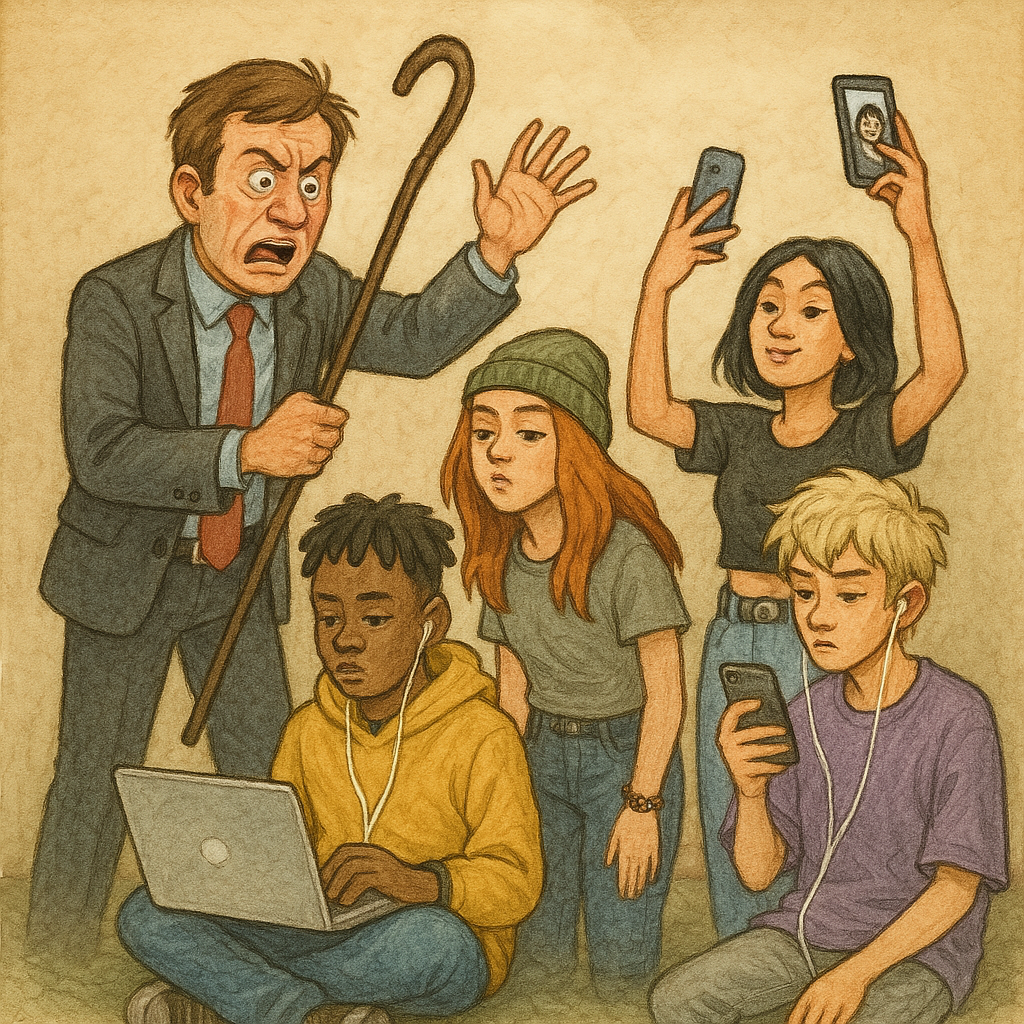
Managing Gen-Z can feel like herding cats – if the cats had TikTok/Twitter attention spans, zero patience for corporate BS, and an allergy to outdated processes. They demand flexibility but expect promotions yesterday, thrive on collaboration but ghost meetings for DMs, and want “purpose” in every task while rolling their eyes at anything resembling hierarchy. They’ll fact-check your words with a Google search mid-conversation, call out inefficiencies loudly (often on Slack for everyone to see), and prioritize “mental health days” over last-minute crunch time – forcing you to actually, you know, plan ahead. Their digital-native confidence is impressive until you realize they’ve never addressed a client without an emoji.

Adapt or perish, boomer!

The idea that Gen-Z are “unmotivated” and “lazy” is rooted in a stereotype supported mostly by the companies with a rigid organizational culture. They are not poorly motivated, but rather they are motivated differently. The problem with Gen-Z is not the lack of motivation, but rather weak mythology and unappealing meanings shared, for instance, within an organization. This short article aims not at solving the problem once and for all, but rather at exploring the alternatives, rather at taking a look over the generational fence.  In doing so, it makes sense to briefly consider what Gen-Z is, what motivates them at work, what meanings they get exposed to, and honestly looking back in the mirror to what companies offer.

Continue reading “How do you motivate a Gen-Z?”

Meaningless denial

It is surprising how far a human can go to deny the undesired but evident. All of the discussions about meaning and absurdity by Camus, Sartr, Russel, Becker and the likes are the stubborn denial of the evidence and the obvious. Nevertheless, they go in depths in order to justify their poor choice with complex and rigorous reasoning, which once and for more proves that we are the product of the stories we choose to tell to ourselves. Their stories though sound sublime and heroic wrapped in solemnity  in essence are empty. In the words of Andersen’s fairytale punchline, “The emperor has no clothes.”