Source: https://www.facebook.com/reel/987251912878678
Another good example:
Business card website
Source: https://www.facebook.com/reel/987251912878678
Another good example:
Three step combo:
Source: https://www.facebook.com/reel/2246952502353999
Source: https://www.facebook.com/reel/844833010890091
Source: https://www.facebook.com/reel/497024492716377
Aut viam inveniam, aut faciam
Или найду дорогу, или проложу ее сам.
I will either find a way or make one
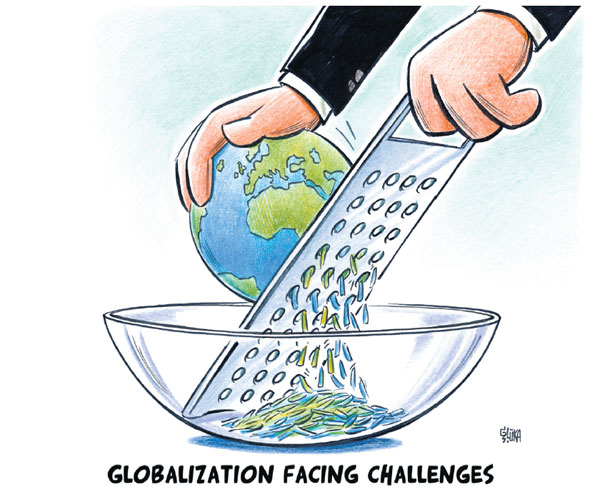
Image source: http://www.chinadaily.com.cn/a/201907/01/WS5d196537a3103dbf1432b248.html
Mark my words, but the situation we have today (as of May 2020) in the economy and politics globally is the end of globalisation as we know it. If you missed somehow in the notion of globalisation, it is, according to IMF 2000 definition, “the increasing integration of economies around the world, particularly through trade and financial flows.” Besides the trade and capital movement, it relates among many others to the movement of people and the spread of knowledge/technology as some of the most important mechanisms for the existence of globalisation. We are about to witness how all of these are going to be trashed or replaced. Replaced with what? Now, this is a good question. To even distantly approach it, we need to see why/what for globalisation exists, what happens now (past years, even a decade) to threaten its existence. Only then we can imagine/fantasise what is next.
Why globalisation exists?
It is almost a common sense that trade is a part of the big geopolitical game and the rules were set to serve the interests of the main beneficiary (-ies). Let me reemphasise: it was assembled by the interested player(s) for the expected benefits of the interested player(s). If someone is good at swimming, it would be naïve to propose to compete at marathon running especially with professional runners. If you are good at swimming, then make everyone swim. The existing global trade system was designed to facilitate trade in those areas, where the western civilisation has a relatively good edge against the rest. The system is designed to support the trade of high-tech products, goods and services, and financial instruments which yield thicker profit margins. The rest of manufacturing, for instance, is considered insignificant and was outsourced to the second and third world countries. No one designed the system for the resistance of the heavy stress conditions, global crisis, major threats as this is not the main strength of the one who sets the rules.
In the post-Soviet era/post-Cold War era, it was considered that the development of the globalisation would secure the leading position of the USA as the main beneficiary. The foreign policy of Ronald Raegan administration brought “the giant” to the knees. The decision was made to ransack the Soviet Union, Russia and the satellite states, benefiting of the abundant resources and relatively unsaturated market of Eastern Europe. Think for a moment about the geographic spread: from Eastern Germany on the west, to Yugoslavia on the south, up to Estonia and all the way to Russian Kamchatka laid the market to consume the manufactured products and resources awaiting for someone to get hold of them. The pie was too big to digest alone so the States brought to the table its Western European allies. At about the same time, China was allowed to get access to the globalisation system. China, at the time, was a huge pool of cheap human resource and outsourcing some of the insignificant tasks made good sense. Then producing more advanced products made equally good sense, since no one expected anything of China. The players made money out of this cooperation, but no one expected that China can win the race. The race was for the white gentlemen to win – not for China. Fast forward to present days, here we are: China is the biggest manufacturer, biggest economy, with the biggest internal market, projecting its influence there, where only the gentlemen were allowed (Africa, Middle East, Europe and even Americas).
What happens now?
Internationalization is a complex process with many scientific articles dedicated to that. Comprehensively presenting it in a format of a short blog post is a task that requires major simplifications. Nevertheless, here is what it takes from a company to consider this major step in terms of market, operation modes and product – internationalization strategy canvas.
Understanding the big picture is critical for strategic decision-makers. Implementation of a decision too early or too late can turn very costly. Especially in the context of internationalization, a right decision in a right time makes an ordinary company extraordinary. The challenge is though how to understand the timing and correctly interpret the operational context of a firm, when external environment is always in a change?
International trade is an “infinite game” (see Carse 1986). Good news is that rules are the same for all players; the pace of the game is different, but stages are the same; the sequence of steps is different, but steps are the same. Each player sets own goals and selects a strategy. As it is common for the games, choices come with a price tag. Once the setup of the game is clear, the action is just a matter of imagination.
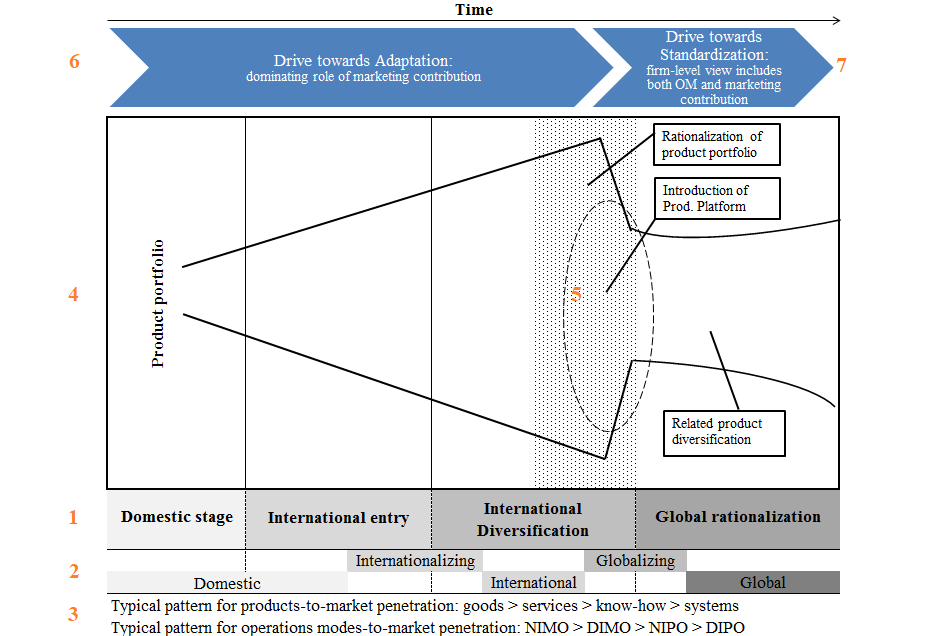 Figure 1. Internationalization process canvas
Continue reading “Internationalization strategy: how to go from local to global”
There is a common problem with the hand brake – uneven braking. It is rather easy to start looking for the problem in the brake caliper, worn pads or in the stretched brake cable. I did exactly that on my old, but warmly loved Honda Accord CB3 1991 year model. After trying all the possible solutions, I even consulted with a couple of mechanics, but they could not figure either. The solution was unbelievably simple. Here, I will show how to address the uneven braking by a mere adjustment of the cable tensions on the example of my Honda.
My car has failed car inspection with the abovementioned problem. Only the right rear wheel was locking when the hand brake was applied. I replaced the caliper, but it did not help. I tried adjustment of the brake cables, but this did not help either. The image below shows the brake cables after my attempt to adjust the brakes.

The main problem that I found is in the sequence of hand brake adjustment which is not clearly explained in the owner manual either. I found a video on Youtube that was explaining the proper sequence. If the steps are skipped, there will be no effect. The adjusted brakes will still not work.
The solution was rather simple, but requires the proper sequencing. So, here is the step-by-step guide how to adjust the brakes.
Working from home brings own challenges. For me, this translates in shaping the productive working environment which usually was arranged by someone somewhere. An efficient use of space on the desk surface is a part of the problem I imagine many of us struggle with.
With distance work, I noticed that I use three different types of headphones and most of the time they are laying somewhere on the table or hanging. NOT NICE! It would be great to have a designated place for them – a headphone holder. Finding one online is not a challenge and they cost starting with $25. Some are really cool too, but waiting for their arrival is more painful. Having Soldworks and 3D printer at hand, there is no excuse to producing one by myself.
So, first, drawing some basic shapes, shelling, patterning, and the model in Solidworks is ready. Since the headphone holder takes some table space, I shaped the bottom in such way that it can hold some smaller parts like a paper clip or MicroSD card. The holes on the bottom of the top part is for hanging headphones on small hooks I will print later. So, being happy with the design outcome, I go to the next step – printing.
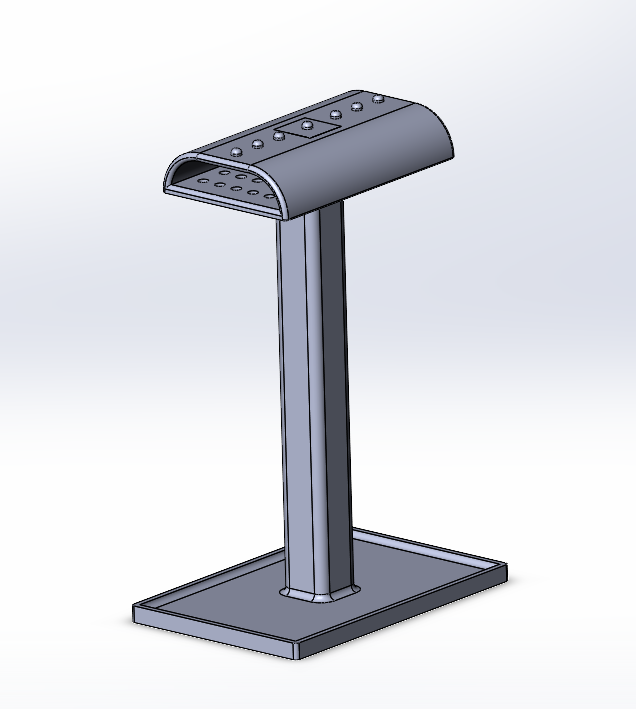
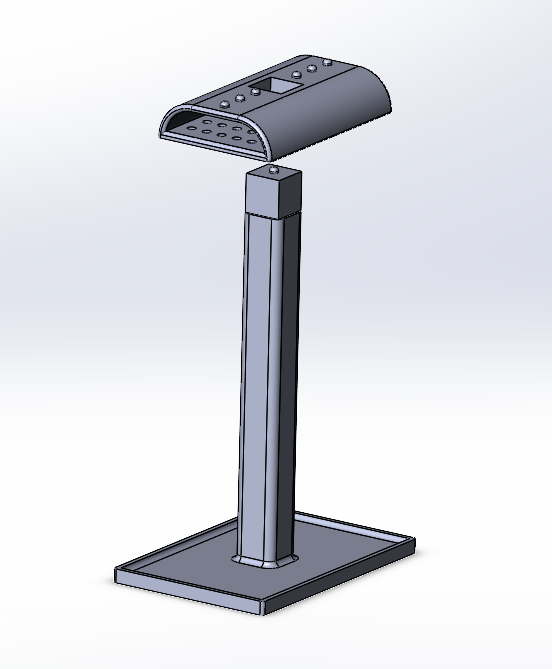
Next are the few steps in Simplify3D to set the printing parameters. For printing, I used the white PLA material. The flat vertical surface of the top part led to some overhangs inside, but for the function, I am ready to give up some of “the pretty” for now.
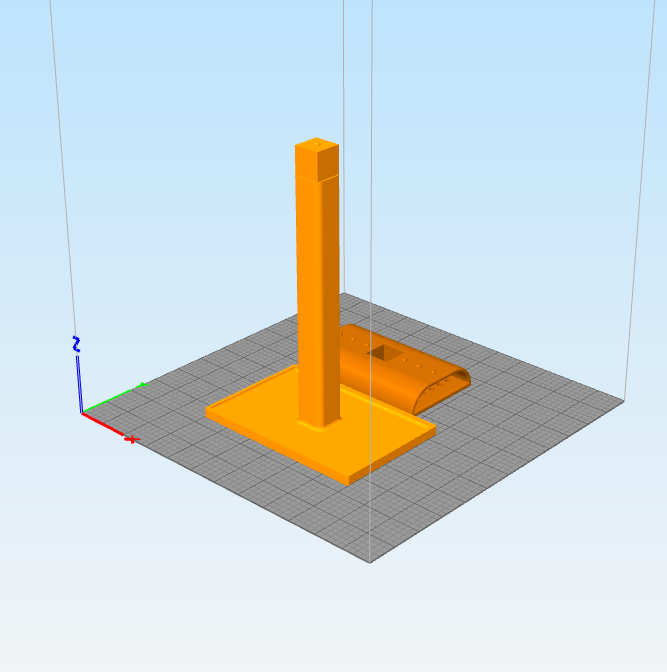
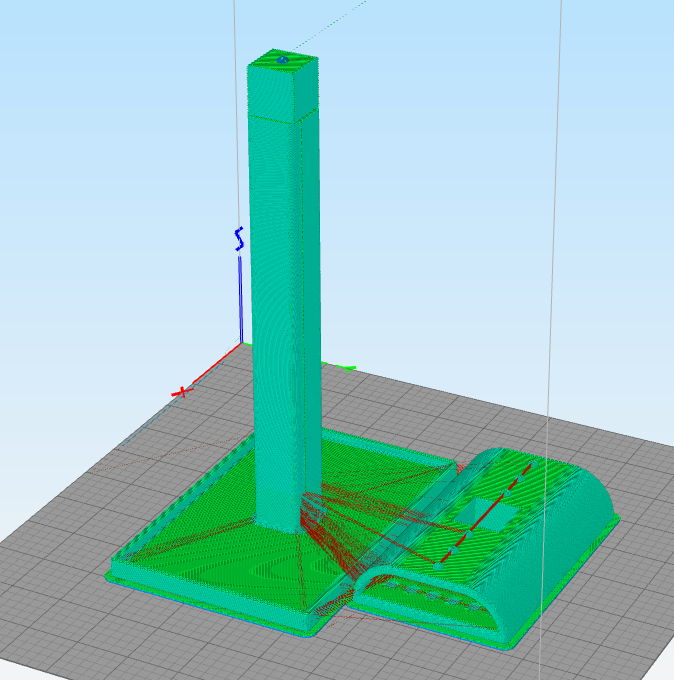
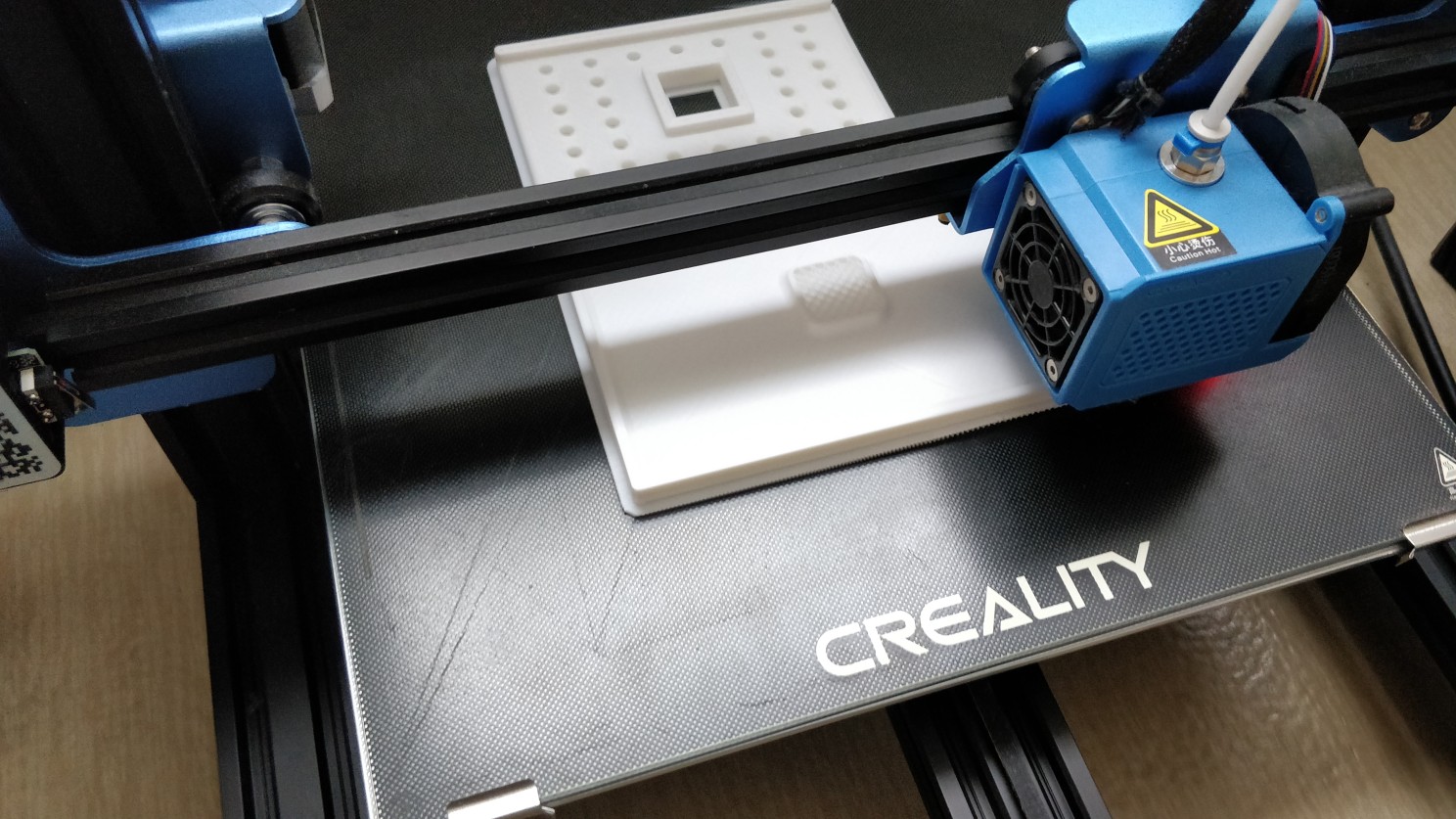
…and after 32.5 hours, here is the outcome.
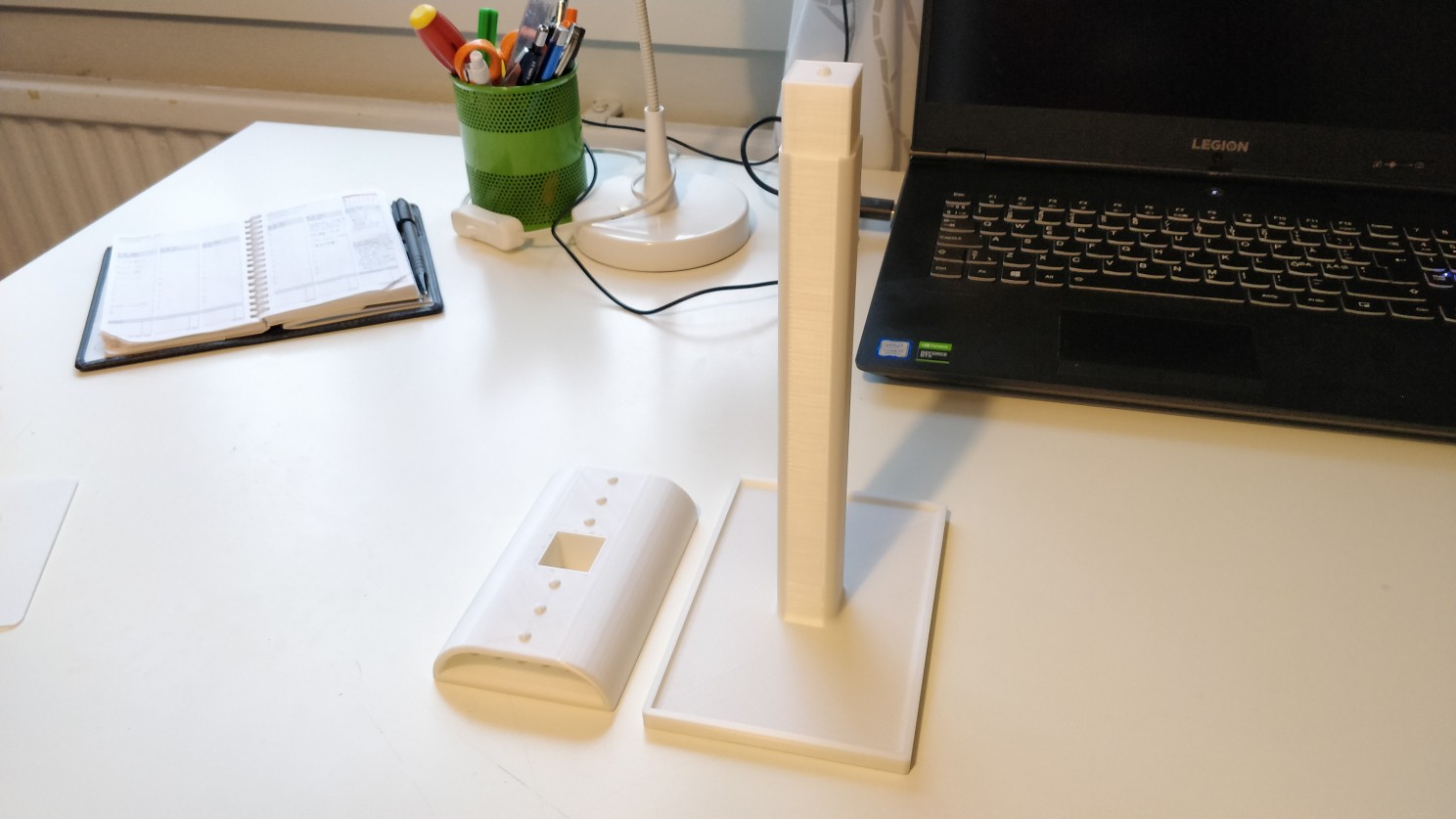
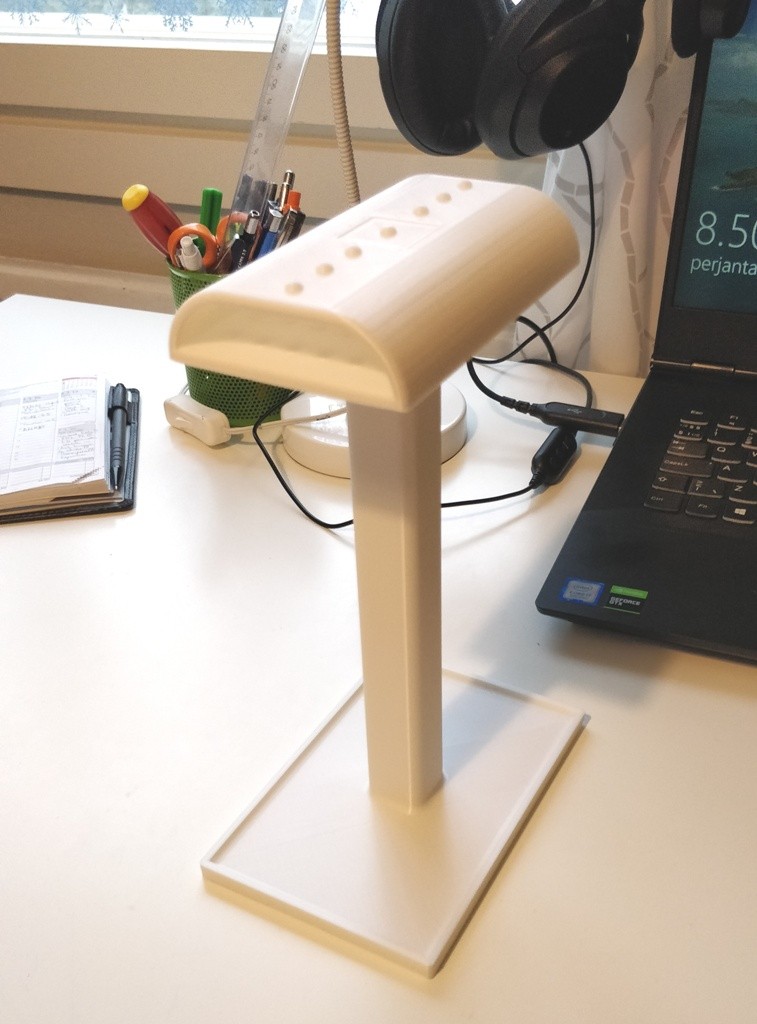
This is how it looks on the table:
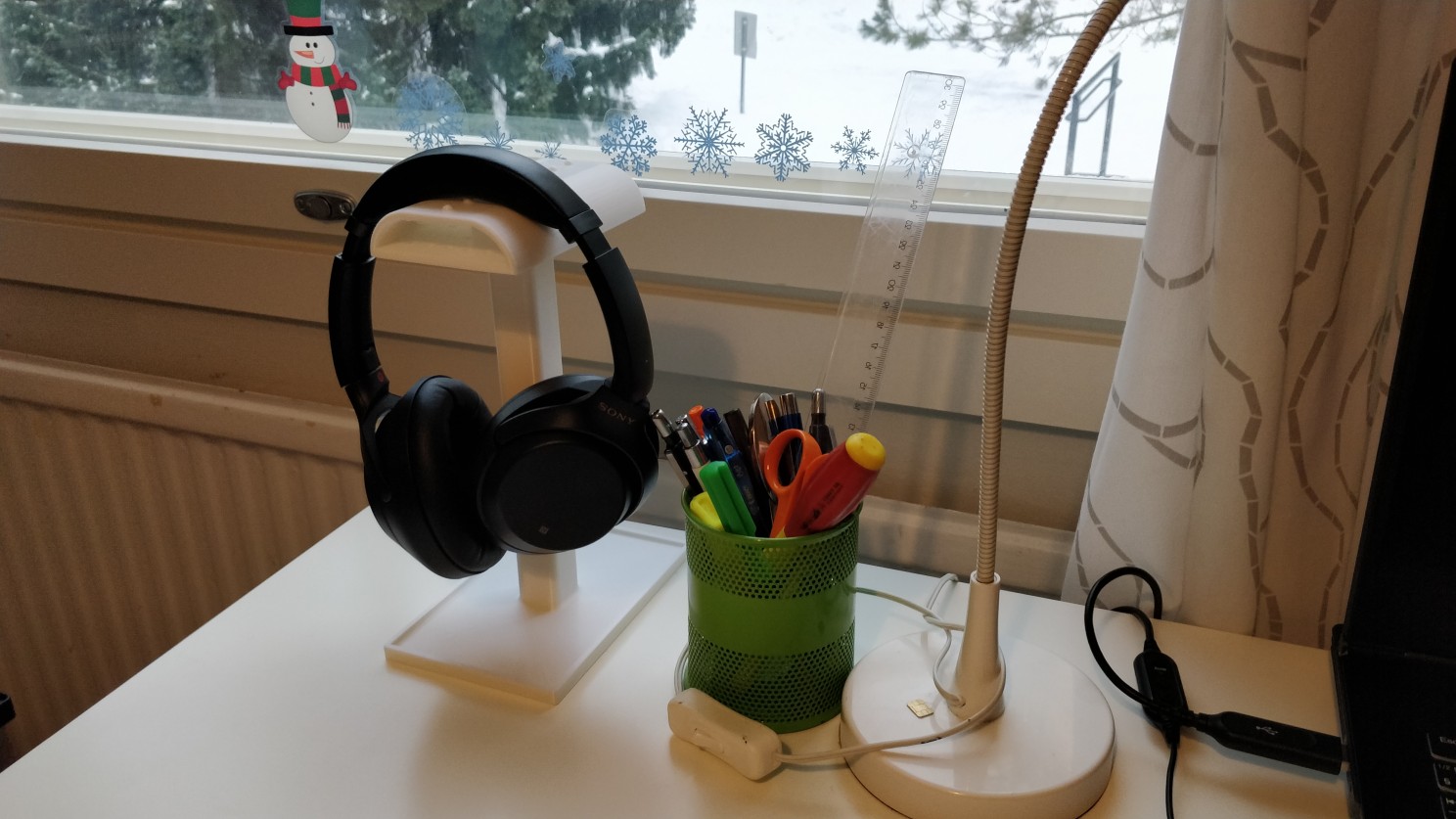
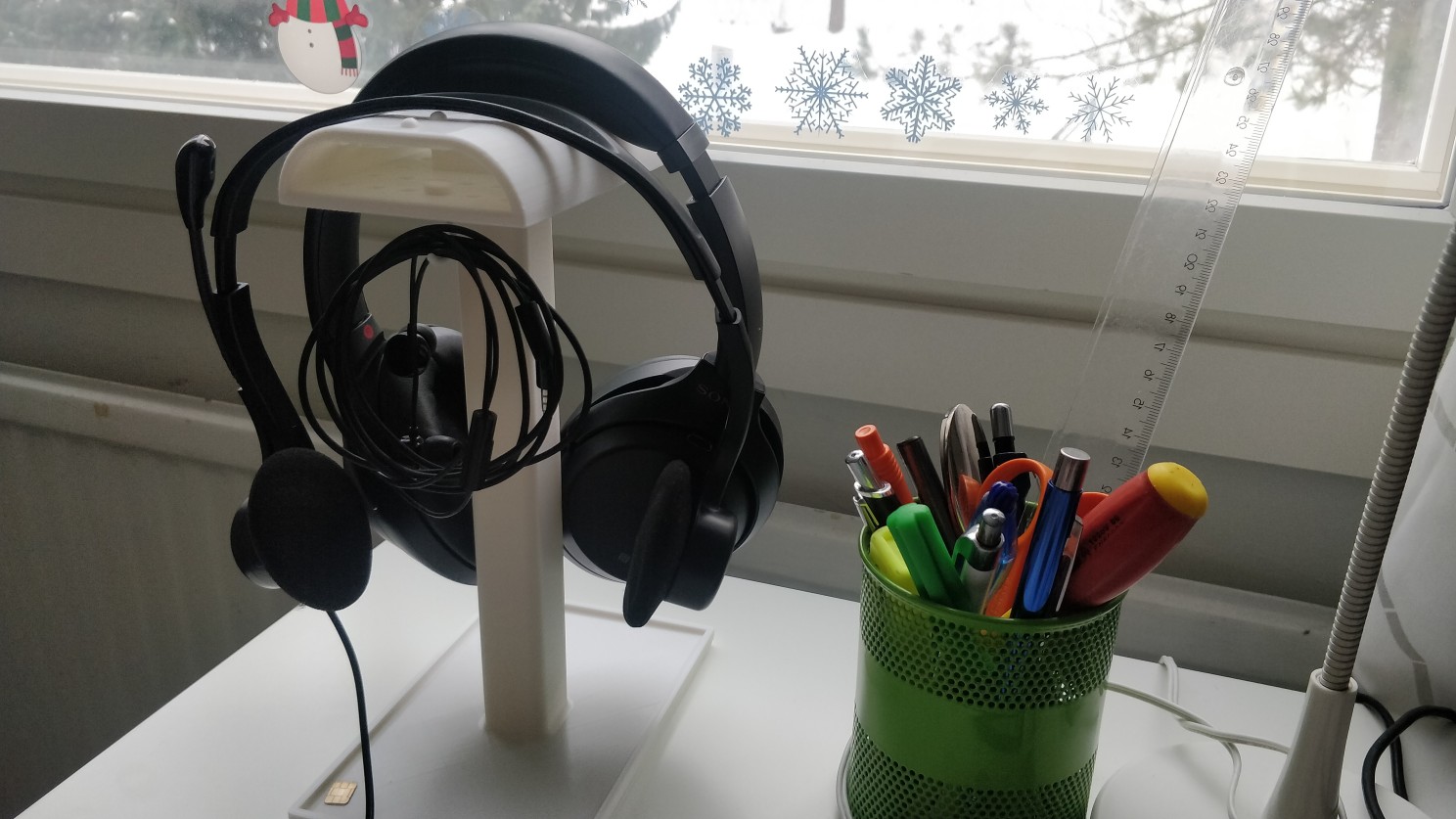
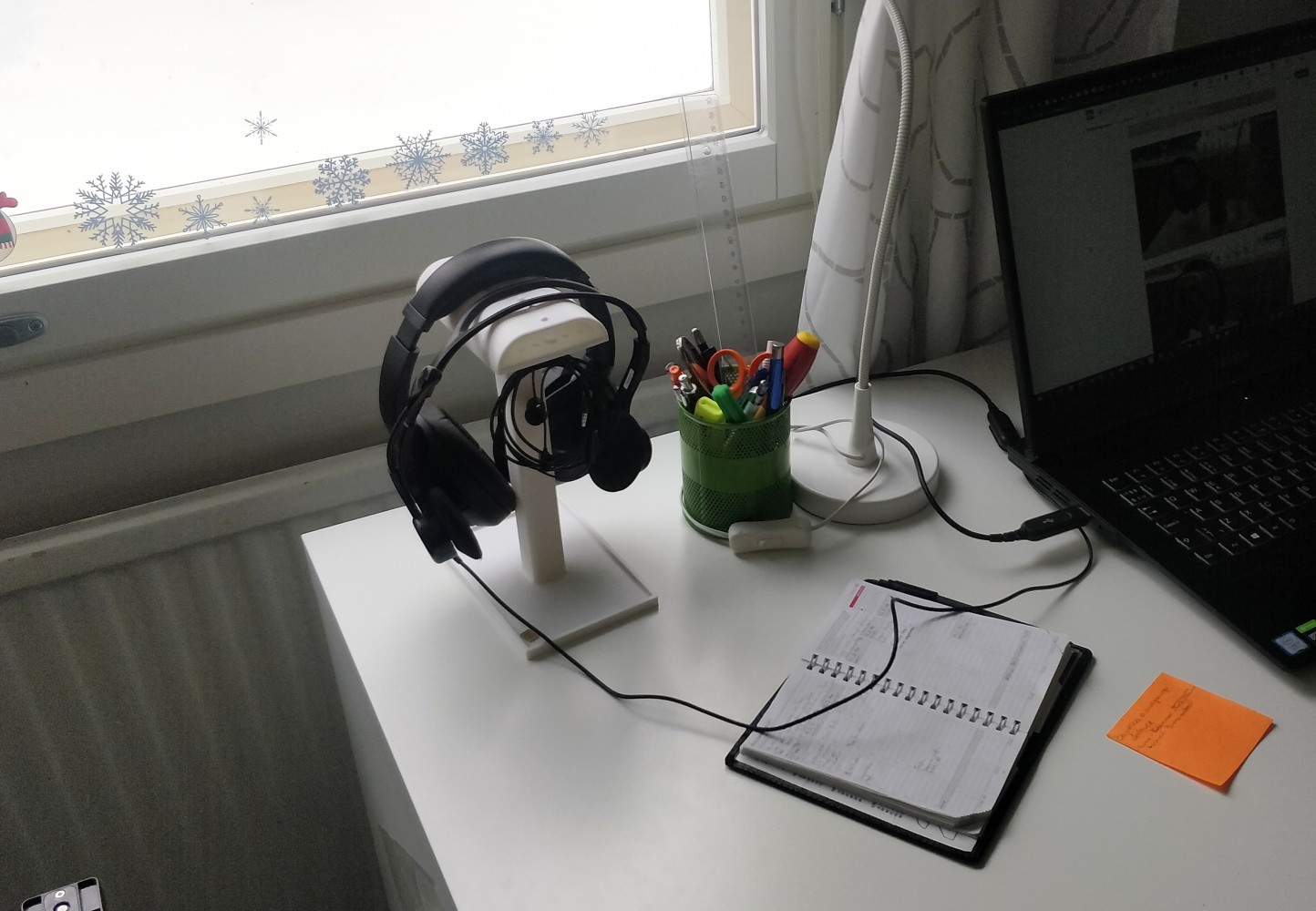
After half a year of happy using the holder, I cannot stop wondering how I lived without it.
This article is also featured on LinkedIn.