Formation of Regions: making sense of global politics

Imagine, you are a decision-maker in an international firm. You come out of comma and now you try to catch up with what you missed from the recent news. Would you be surprised to learn about the recent US claims on Canada and Greenland, reaction of the EU, other regional developments?

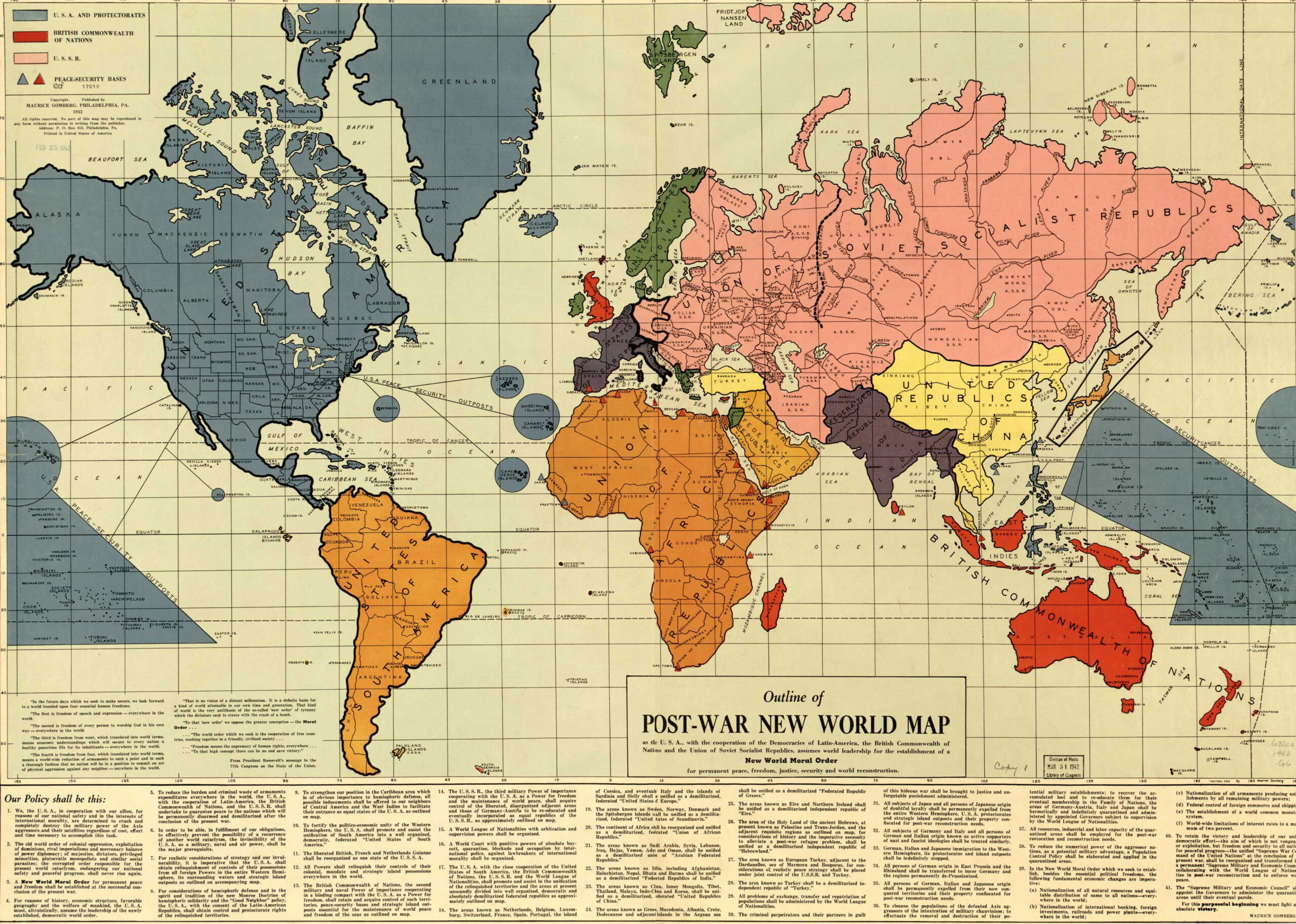
Depending on how long you were off, you will find an unexpected resonance with the geopolitical developments that have unfolded during your absence from active decision-making in examining Maurice Gomberg’s 1942 “Outline of Post-War New World Map (image below)”. You would note the European policy circles in a state of profound puzzlement over recent American statements regarding territorial interests in Greenland and rhetorical positioning toward Canada – pronouncements that may seem unprecedented but in fact echo Gomberg’s vision of hemispheric consolidation under dominant powers.

Source: https://en.wikipedia.org/wiki/Outline_of_the_Post-War_New_World_Map

The map proposed a post-war order organized into vast regional blocs—a United States of America encompassing much of the Western Hemisphere, a Soviet-dominated Eurasia, and other spheres – prefiguring patterns we observe today: Continue reading “Formation of Regions: making sense of global politics”

Quick Guide to Finland – Post #1 – The Foreigner’s Basics

If you were to ask a fish in a sea about the sea that surrounds it, it will tell you there is only water around. The same applies to Finns and Finland. That what we call “Finland” is besides the functioning institutions within the recognized borders is also a number of messages, postulates of truths that apply to the certain area and make its inhabitants unique from others. For instance, what is happiness for a Finn? What is success? What is the role of association in Finland? – and there are many more one might want to know in advance. The institutions are easy to identify and interact with; however, revealing the nature of the mysterious messages that form the culture of “Finnish-ness” is often quite a challenge.

There are some truths about Finland that not a single Finn will tell you in part because of political correctness, in part, because they are often unaware of these truths themselves although they follow them unconsciously and, in large, because these messages are a taboo for discussion though they form the natural fabric of their life. I struggled and had to learn many of these lessons on my own skin. I wish, I knew this before coming to Finland. It would save me from a lot of headache. So, if you are a foreigner and you read it, do yourself a favor – learn the environment. You are welcome to disagree with me, reasonably argue back or stay silent, but, please, choose to learn the environment you either plan to experience by moving or have already settled in. Here are four of many lessons I learned the hard way and I wish someone told me this in advance bluntly as I do.

Finland is for Finns. Finland is such as it is because it is built in such a way by the Finns and for the locals. If political, social, economic or any other domain of life in Finland does not fit in your “ideal-small-little-Finland”-box or your perception of this country – the problem is not in the country, it is in the perception problem; adjust your understanding by taking everything you see here as a given. Learn to live with it if you choose to stay. If you do not like something, nobody holds you down nor holds you back. Move to your dream land! You are not a tree. If you do not want to move, stop winning and look for opportunities as there are plenty. If, however, you still want to bring a change, find and join other people with the same agenda. This is a bitter pill to swallow, but once you digest it, it will turn into a remedy and help you to carry on. Continue reading “Quick Guide to Finland – Post #1 – The Foreigner’s Basics”
Prognosis: Rare Earth Metals (REMs) and Current Situation on European Continent

It is a secret de Polichinelle that the West, AUKUS and particularly the US is in Ukraine after the natural resources and partly to weaken Russia. Not just any resources, but the rare earth metals (REM) in particular. The chase for REMs also explains the failed revolution in Kazakhstan (2021), Finland’s and Sweden’s joining the NATO, active interest in purchase of Greenland, aggressive rhetoric around Canada becoming the 51st state. It is easy to arrive to this conclusion once the connection is drawn around the following dots: advancement of IR4.0 built on digitization and digitalization, interconnectivity, smart automation, development of AI, heavy reliance of modern electronics (smart-phones, -TVs and computers), development of supercomputers, heavy reliance of modern weaponry on REMs (each F-35 take almost half a ton of those), map of distribution of REM and the roaring news add up to the desired picture.

Continue reading “Prognosis: Rare Earth Metals (REMs) and Current Situation on European Continent”

Is Moldova still a failed state (2025 update)?

As a born on the territory of the Republic of Moldova, I naturally tend to follow what is happening in the country. Normally, I refrain from commenting about the political events because find it as interesting as commenting flea racing. Why would I change the habit?

While checking through my old notes and files, I stumbled upon something I wrote in almost ancient 2008. We were assigned to produce an essay arguing why our home country is a failed state for the Political Economy class. It was quite interesting to read it after the passage of time. I am pleased to notice that although I had rather naive perceptions about the potential of better future for the Republic at that time, the background analysis of the problem still remains rather valid.

So, what has changed since?

Continue reading “Is Moldova still a failed state (2025 update)?”

Essay: “Republic of Moldova – Natural Tragedy or Controlled Disaster” (2008)

PDF version: Diduc Alexandru – Political Economy, Moldova

Alexandru Diduc
April 22, 2008
Moldova – Natural Tragedy or Controlled Disaster
4052 words

Abstract

This essay will focus on the reason for the instability in Moldovan economy and the failing state the Republic of Moldova is. The central idea of the paper is that the causes for the controlled disaster in the country are not only internal but mostly they are of the external origin. The internal causes are the mostly agrarian economy and the transnistrian conflict. The external causes are the incompatible geopolitical and geo-economical interest of the EU and Russia. Transnistrian region and Moldova is used in this game as a small change and a tool of control. The change in the wellbeing of the united Moldova is expected to come with the settlement of the conflict and dynamic implementations of reforms.

Introduction

Moldova is widely famous for its wines, its poverty and 4,163 km² of uncontrolled territory on the left bank of the Dniester River. It is a matter of fact that Moldova is a failed state and a weak functioning economy. These are just consequences of the more complicated processes that influence the outcome. The Republic of Moldova (RM) is just a small card played on the table in the geopolitical game of the superpowers in the region. Unmatched geopolitical and geo-economic interests of pragmatic and contradicting Russia and EU and of ambitious Moldova are the main reason for the failed state and poor economy as Moldova is now. But the change is expected to come in 2009 and the following years with the settlement of the Transnistrian conflict and the energetic implementation of the reforms.

My assumption is that there are no any inner parties interested in fueling the instability in the state between Moldova and Transnistria, and which stand behind the weak economy. Thus, there should be any external forces, Russia and EU, which directly or indirectly influence the present situation in the economy and state. Moldova is a peaceful nation and the nation that highly values stability, predictability and wealth. Moldovan people like to work and enjoy the times of economic and political stability more than anything else. Moldovans have low but firm expectations of stability, which they pursue either through the migration or short term employment abroad. But mostly these are the short-term solutions and in the good times the population is going to return. Thus, the resolution of the Transnistrian conflict and dynamic economic reforms along with the EU integration will bring the prosperity and positive change in this region.

Continue reading “Essay: “Republic of Moldova – Natural Tragedy or Controlled Disaster” (2008)”